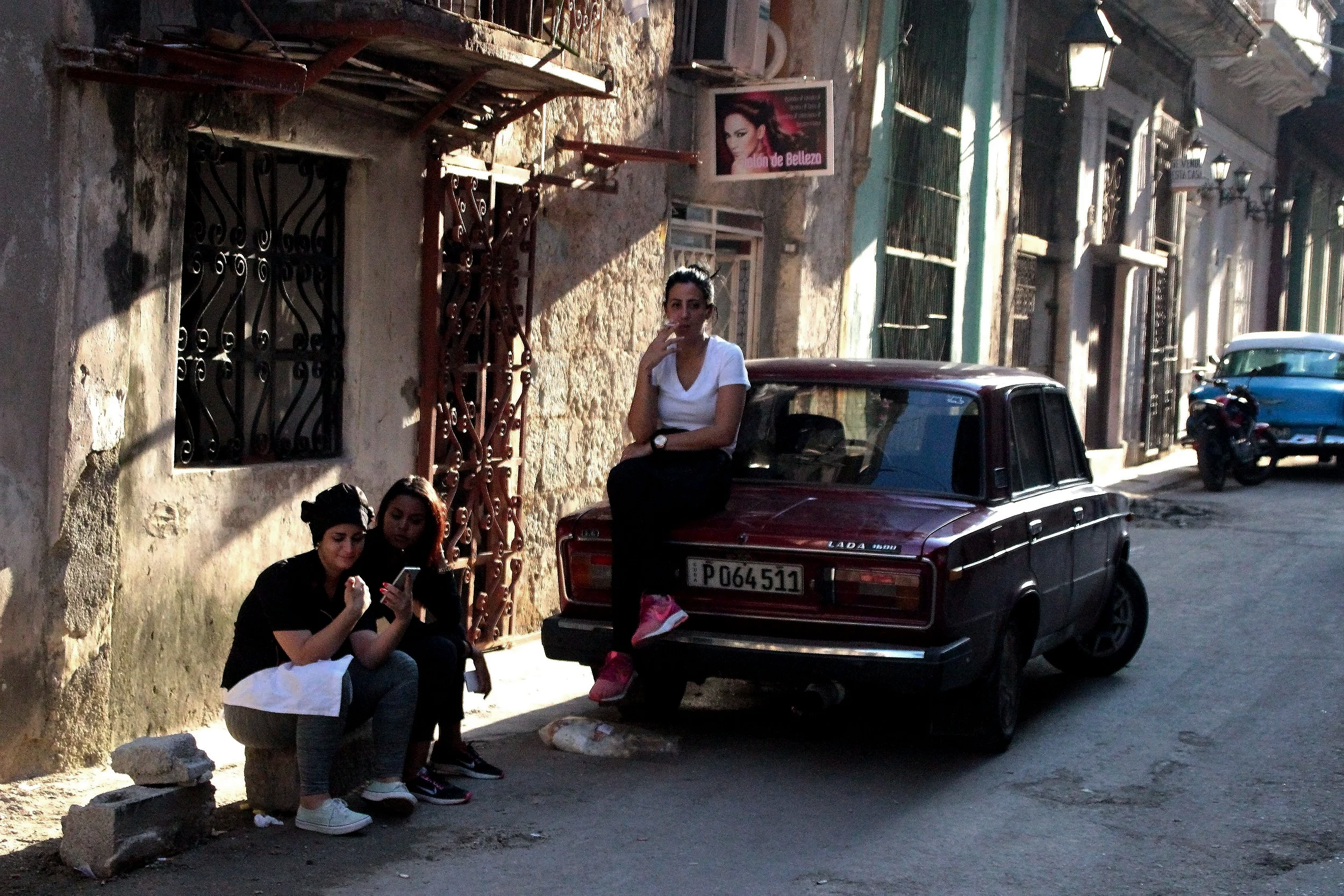
A group of women sit outside a beauty salon for a small break in Old Havana.|Credit: Reynaldo Cruz Díaz
Throughout my over seventeen years doing photography, there has always been one instance in which I have particularly struggled with capturing a good image. The reason lies on the fact that I haven’t been able to control the exposure of the camera based on the lighting available at the time. Hard lights and shadows can change the perspective of a scene, mainly in street and documentary photography.
There is always a safe thing to photograph when documenting life: staying away from certain people (mainly because of what happens when some of them are uncomfortable with the idea of a camera pointing at them), staying away from backlit objects and structures, and staying away from framing scenes that have hard lights and shadows at the same time.
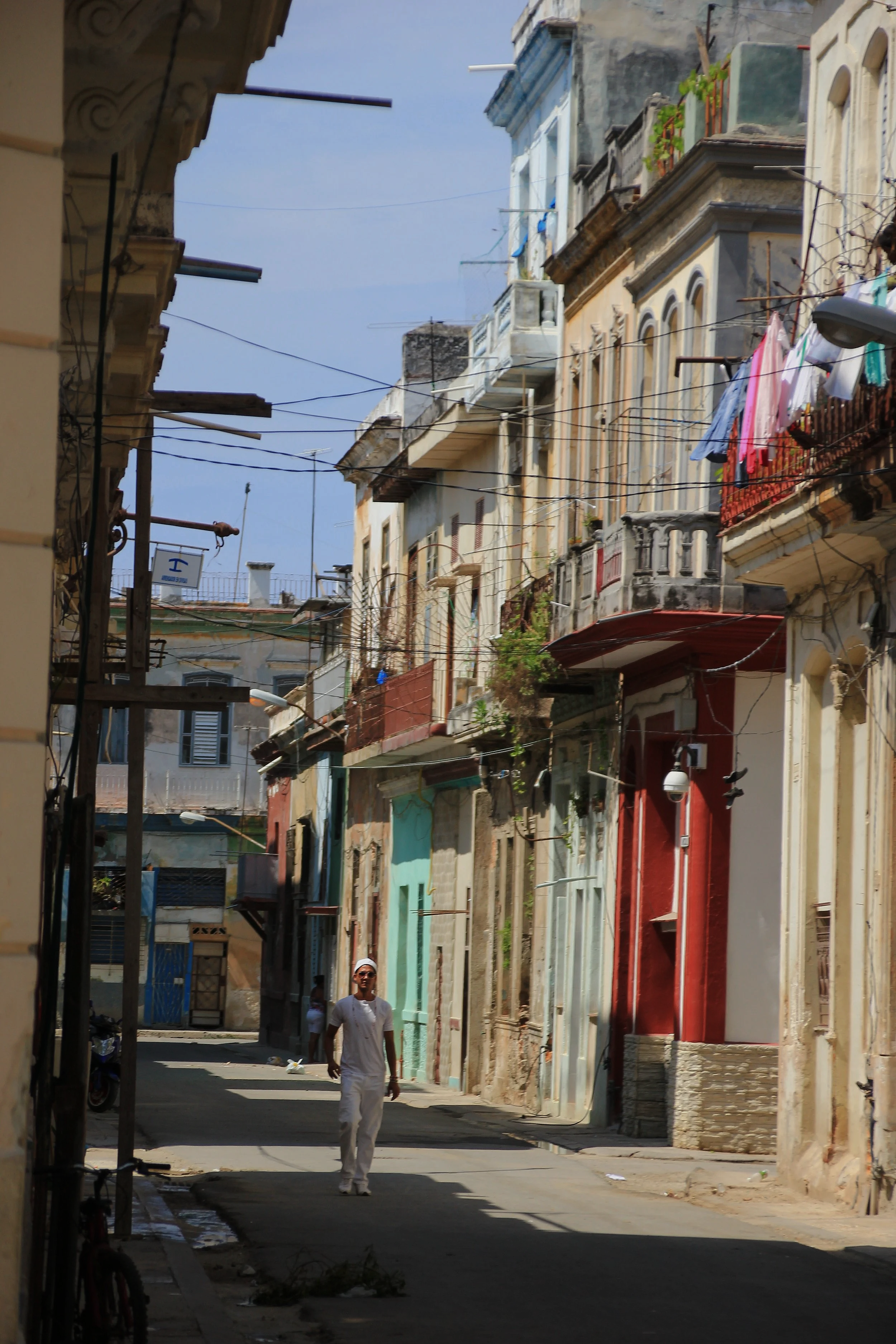
A yabó, practitioner of Santería, walks along the streets of Central Havana.|Credit: Reynaldo Cruz Díaz
When it comes to the latter, I believe it is sometimes more about the view of the photographer than it is about what makes the photo good or bad. Obviously, the view of the photographer will definitely alter the perception of the viewer, and that is what makes this contrast so interesting.
I am an avid consumer of photography—whether by reading about it or by looking at pictures. I constantly go to the book section of every antique shop I visit just looking for old photography books. The work of other photographers captivates me as much as it captivates me to chase around images and stories all the time.
So, while inspecting my own archives or just looking at any of the many books I have in my collection, I come across some of those photos. You don’t need to be a rocket scientist to understand that a cloudy day would have completely changed the image completely, the same way exposing on a different part of it would have changed the scope or the viewer’s opinion.
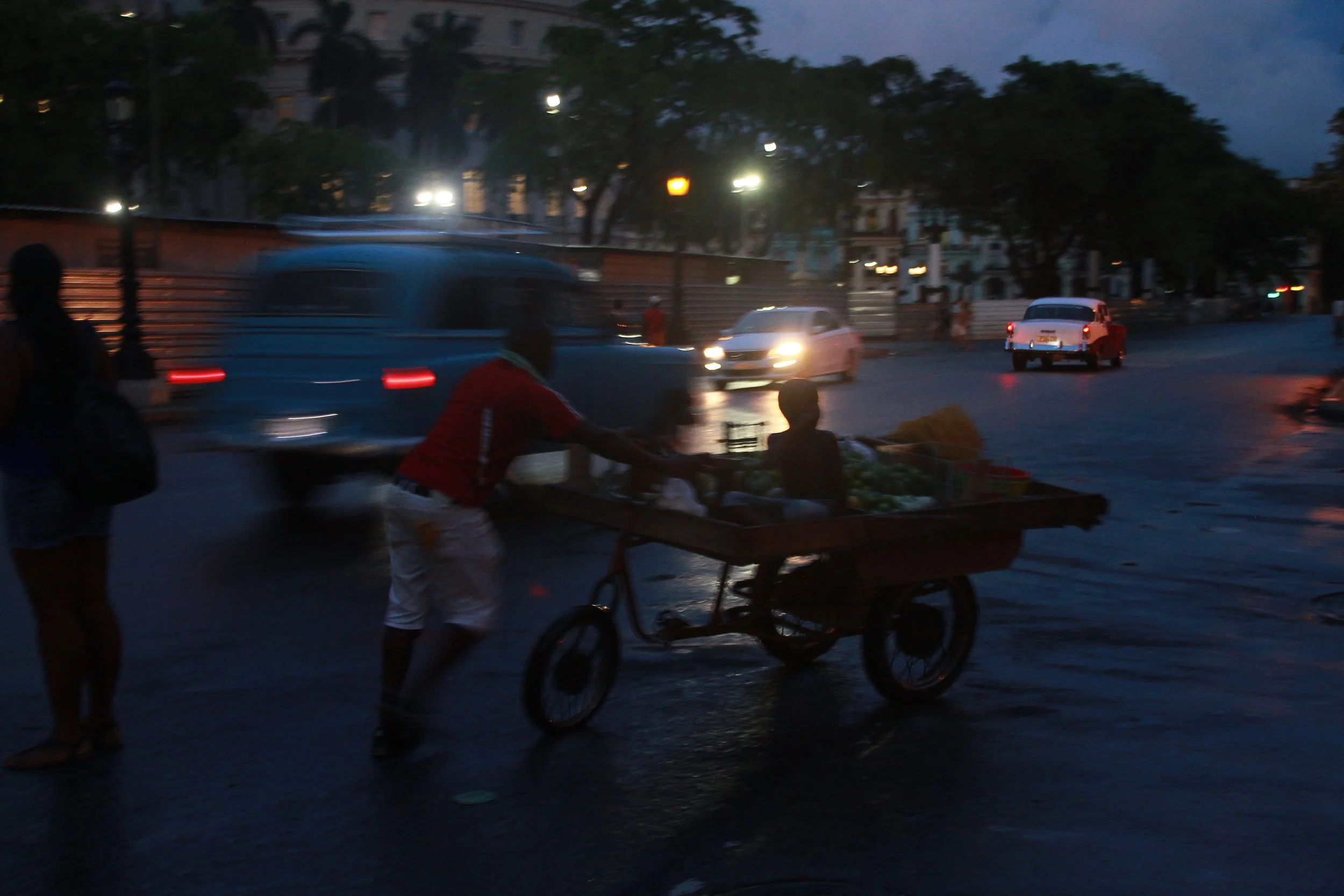
A Cuban man pushes a fruit cart with his child on it.|Credit: Reynaldo Cruz Díaz
The photographer, as the storyteller, needs to know what they want to tell, what side of the story they want to give importance to, what part of the frame they want to draw attention to. In a way, I believe the photographer is altering the scene without having any intervention on it, other than exposing the take and pressing the shutter.
It sometimes feels like we can whimsically include something in our frame and still be able to erase it or make it imperceptible without using editing tools, just by working with lights and shadows. In a way, this gives us the power of changing the narrative, the intensity, the pace, the momentum. When we are able to do something like that—which happens mostly in days of high contrast—we have a certain power other humans don’t have.
Controlling how the light of a scene gets into the camera sensor is like controlling the scene altogether. Whatever we capture is going to be the truth. Nevertheless, unlike uniformly exposed images, that truth is going to be the one we choose for the viewer to see.
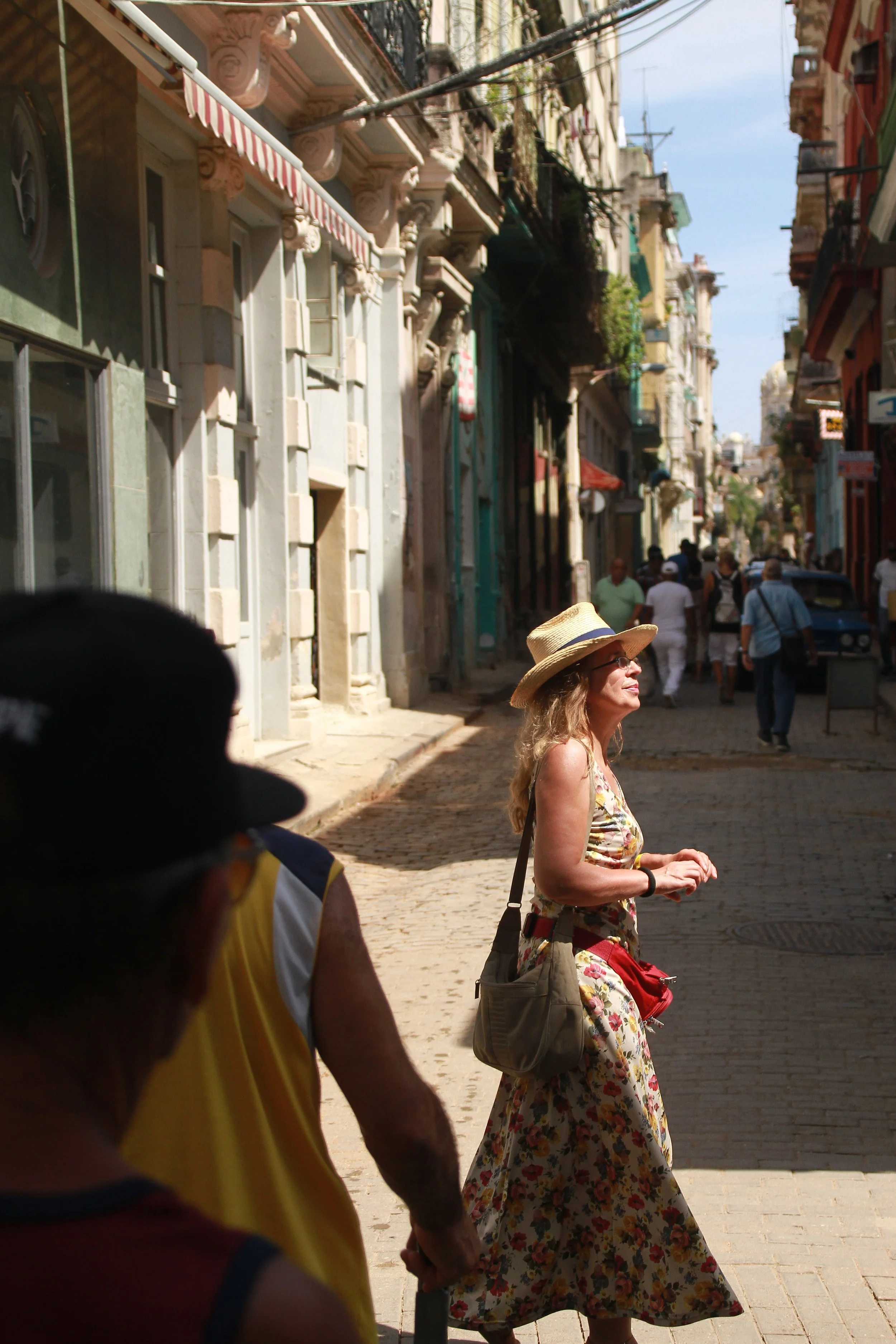
A foreign tourist walks on the streets of Old Havana.|Credit:Reynaldo Cruz Díaz
However, artistically, those images contain a certain power that I believe surpasses evenly exposed street captures. Backlit or partially exposed subjects can emphasize on a certain feature or create a more dramatic scope. They can make photos more intriguing, mysterious or contrasting. Sometimes a person’s silhouette has more impact on the viewer than their face or clothes.
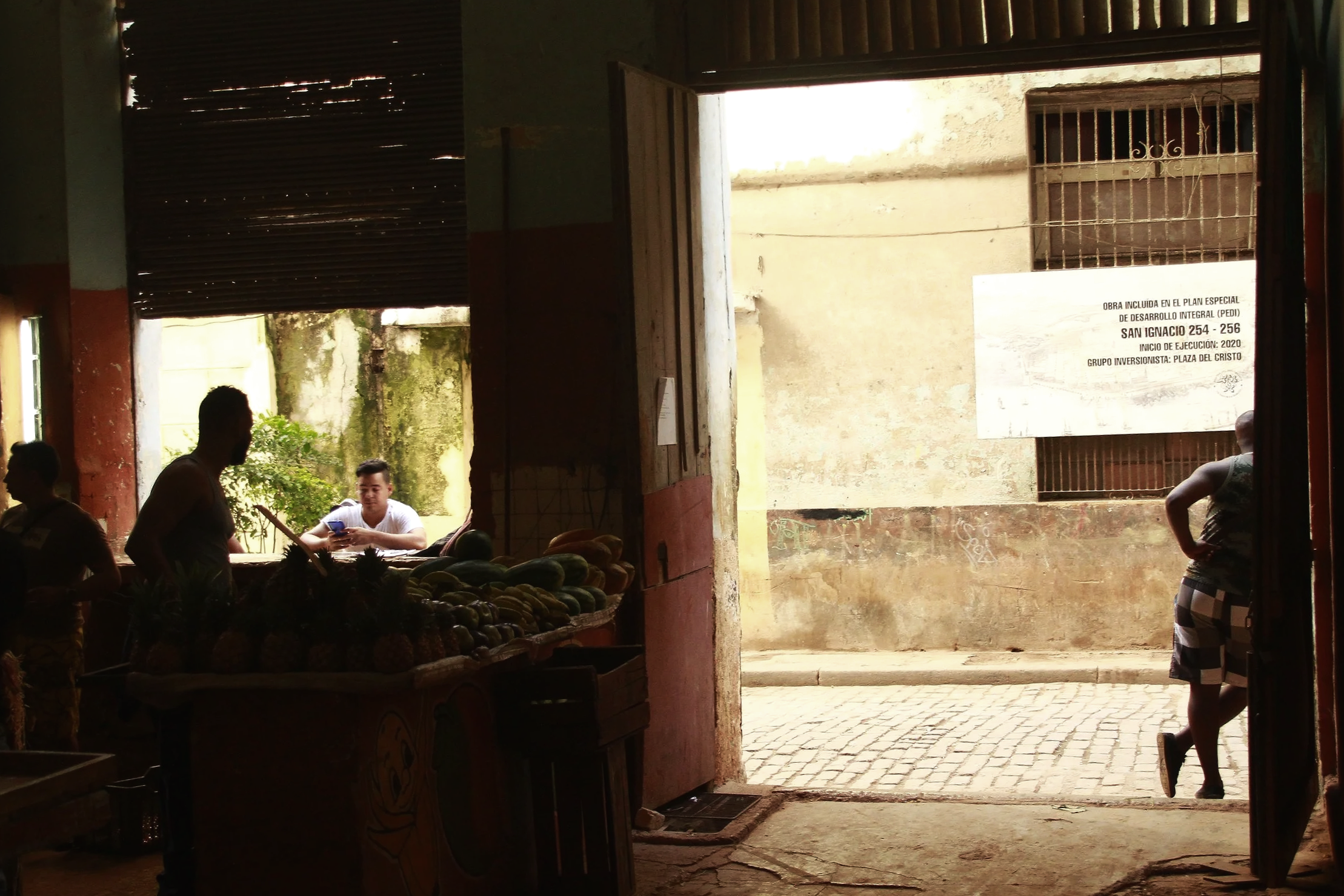
A view from inside a “mercado agropecuario” (produce market) in Old Havana.|Credit: Reynaldo Cruz Díaz
Looking at the work of Magnum Photographers, mainly through books or my own admiration towards some of them, I have gotten better at that. Yet, I have also learned how to appreciate images I took in the past after having the initial thought that they were not good enough.
That has forced me to go back to my files and look for certain pictures that I might have overlooked. For people starting in the art of photography, it should be a must.