Tamron SP 24-70mm f/2.8 Di VC G2: A Great Third-Party Ally
Launched in 2017 for Canon and Nikon, the Tamron SP 24-70mm f/2.8 VC G2 is an excellent alternative for the brand equivalents. Being in my opinion the two best third-party brands, at least for Canon, Tamron and Sigma up their game constantly. With the price of first-party high quality glass constantly going up, a Tamron or Sigma high-grade lens comes in handy.
We all know that the 24-70mm f/2.8 is part of the so-called “holy trinity” of zoom lenses. The 16-35mm and the 70-200mm, both at f/2.8, complete the trio of the must-have lenses for photographers in general. The 24-70mm range is without question the most versatile zoom lens, as it combines acceptable wide-angle and telephoto features, and offers enough luminosity to help you with the shutter speed.
Already in the mirrorless world, getting a Canon RF 24-70mm f/2.8 would have been too much of an investment for me, mainly taking into account that my business was not established and I was not making enough money as a contractor. The same was true for the Canon EF 24-70mm f/2.8, so I had no other choice but to pick a third-party lens.
Camera Bar in Hartford was the place where I acquired the Tamron, thus beginning my first adventure with a top-class lens.
The sharpness of the images (as well as the size of my files) increased immediately. Although I had taken great photos throughout my life with lower-grade glass, the impact of the 24-70mm was almost immediate.
My first big gig with this lens—while I was still wielding the Canon EOS RP—came when Cuban band Cimafunk performed in Hartford. Thanks to my connection with Collin Laverty, who had hired me a couple of times while I lived in Cuba, I was able to secure a spot as a credentialed photographer for their concert. Even in the rain, the lens rendered incredible photos, so incredible that the first image that you see when you open my website is of its lead singer Erik Alejandro Iglesias.
I have used the lens for most of my 24HourProject photos since 2023, and taken it to interesting locations like Cooperstown, Philadelphia, and all over Connecticut. It has been my go-to glass it for some wide-angle shoots that I have needed during baseball games at Dunkin’ Park, my two installments of ConnectiCon, some other paid gigs, two St. Patrick Day parades, all the musicals I have photographed for my school (when light is sometimes tricky to work with), my TFP sessions, and some landscapes. It is my walking lens, the one I use the most, and definitely the one I have on while walking in a fair, a collaborative store, or any town.
The construction is pretty robust: heavy but sturdy. It has an 82mm filter thread and nine diaphragm blades. The distance scale (although I have never used it other than to test if the camera is alive while I am holding it down) is another perk.
Pros:
Admitting that it is still NOT a Canon native lens, so you will NOT get support from Canon if it malfunctions, I have a list of pros and what this item is good for based only on my perspective.
Excellent light: The f/2.8 aperture all the way is something we all want. Even though it is sharper between f/4 and f/5.6, sometimes you need a big aperture, especially in low-light conditions.
Versatility: I have already mentioned how versatile this lens is. It is not very wide, nor very telephoto, but you have a nice combination that feels like it’s the one lens you want to carry with you if you only have room for a camera and a lens wherever you are going.
The diaphragm blades: Nine diaphragm blades enable you to take EXCELLENT starburst images when you close the diaphragm. I have taken excellent shots, including one during the 2023 24HourProject, that actually make a huge difference in how your images look, even without the need of editing.
Sharpness: Any 24-70mm lens, including those made by third-party manufacturers, is extremely sharp. I saw the difference when I changed from my usual Canon EF 28-135mm f/3.5-5.6, which is a native lens, and a good one.
Weather-sealed: Although I have used A LOT of cameras and lenses that were not weather-sealed in unwelcoming conditions, I always had a concern that something could go wrong. Although I do take good care of my gear, being able to shoot under the rain without getting freaked out about the well-being of my investment.
The zoom lock: The lens includes a zoom lock that keeps the weight of the glass from zooming out of your camera when it is facing down. Although I rarely use this feature, I have not fully discarded it, and it has helped me get the camera out of the bag quicker.
The color: Even though it will not give you the great colors a native lens of the same kind will provide, it is still way better than lower-quality native lenses.
Sturdy: I recently had an accident with this lens, as it fell, hit my foot and then a concrete sidewalk. I was terrified, and it was pretty scuffed on one side. Fortunately, the scuff was in the metal part and only the paint suffered the consequences of the fall. Now, it is just a battle scar.
Cons:
Nothing is perfect. Yet, I will list the cons here based not only on my experience, but also on the fact that I have used this lens ONLY with the EF to RF adapter, so I can’t rate its performance with a Canon DSLR camera.
Sometimes it won’t focus: This is obviously one of the consequences of using an adapter, and a problem that I know only emerges in mirrorless bodies. I am sometimes forced to turn the camera off, partially detach the lens and put it back on. Bear in mind, it is a problem that I have also had with OTHER third-party glass. POINTER: The way you hold your camera will make this a big problem or an inexistent one. Whenever you are out there, make sure to hold both the body and the lens, or hold the camera with one hand on your shoulder pointing upwards. Any other position will make the weight of the lens try to adjust to the contacts, and maybe lose them for a moment. Yet, once that happens, you are forced to partially detach the lens and attach it again. That, as a mirrorless user, is the biggest problem to me. Note: After acquiring a Tap-in console from Tamron and using it to update the lens firmware, this problem has disappeared.
Lower burst rate: The Canon EOS R6 Mark II that I currently have lets me shoot at 50fps on electronic shutter and 12fps on mechanical. I don’t like shooting electronic, and the best I have gotten with it has been to 8fps on mechanical, and ONLY after I purchased a Tamron Tap-in console, which updates the firmware of newer Tamron lenses and allows them to adapt better to mirrorless. I don’t know if the same problem emerges with DSLR, but based on my experience shooting with a low-grade Tamron lens and a Canon Rebel back in my last years in Cuba, I doubt it is a problem. So, if you don’t own a mirrorless, I doubt you will struggle with this issue.
Weight and size: This is not only a problem of Tamron, but also a problem of every single 24-70mm f/2.8 lens made in the DSLR world. Mirrorless lenses are smaller and lighter, so more discrete and easier to transport.
What it’s good for:
Being the most versatile zoom range (with that aperture) in any camera system makes this lens the top one investment for any photographer. It’s versatility has been more than proven because it mimics the Canon EF 24-70mm f/2.8 in terms of zoom range and aperture.
Documentary photography: Being a 24-70mm, it provides a nice focal range for documentary images due to its decent wide angle and zoom. Even with the focusing problems that may emerge for someone wielding a mirrorless body with an adapter, a lot of excellent documentary images can come up using it.
Events: I have used this lens for several events, from paid gigs like the ones at Real Art Ways and a couple of parties, to most of the events that my school organizes. I rate it 10/10 in its performance on those situations.
Landscape photography: Although it has limited wide-angle capabilities, this lens can still provide excellent landscape images, although I would still prefer a 16-35mm or equivalent.
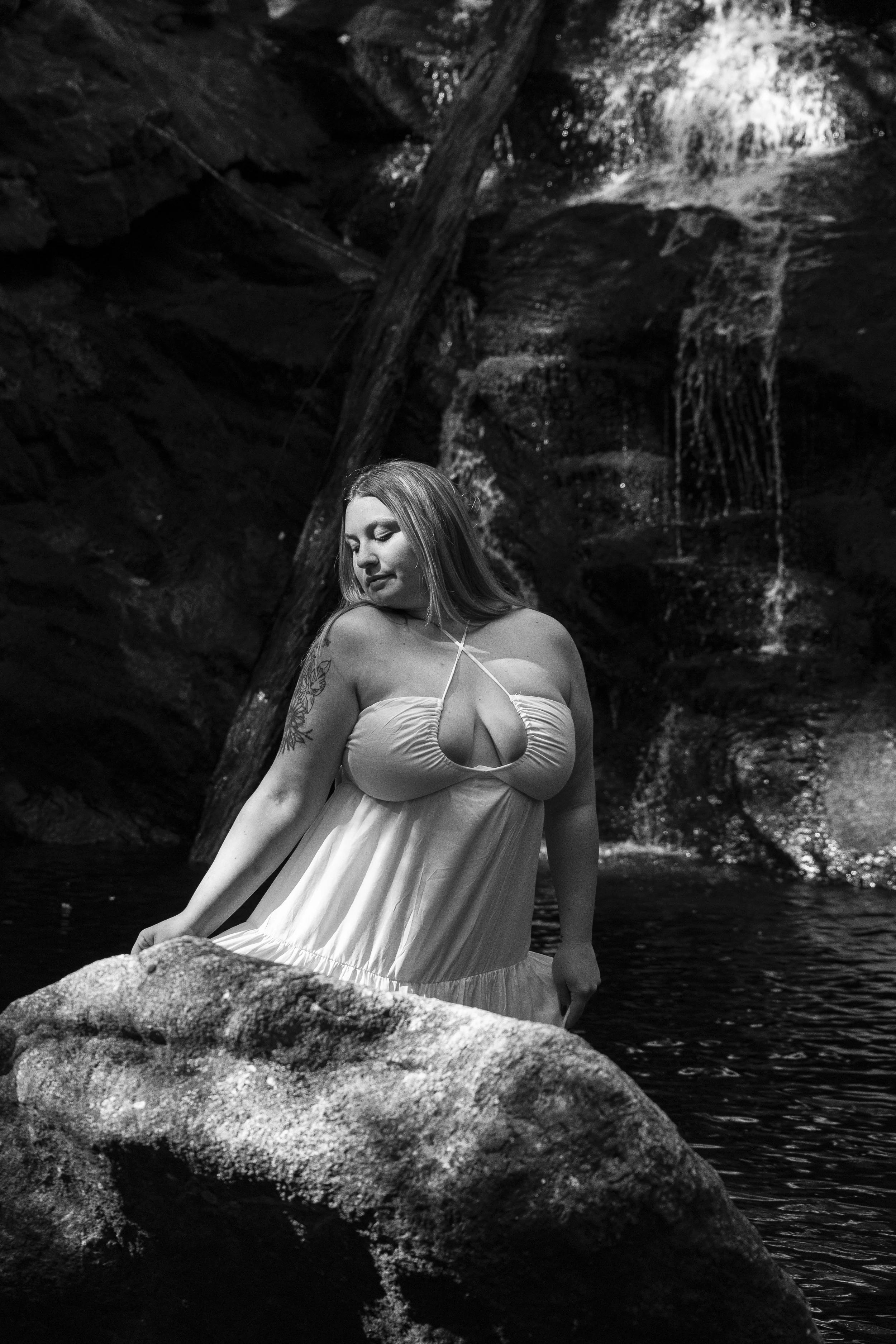
Portrait photography: Most of the portraits I have done since I acquired this lens have been with it. The sharpness and quality helps a lot, and you can use its wide-angle capability for group shots or zooming to 50mm to 70mm to get close-up portraits.
Live performances: The Cimafunk concert and all the times I have photographed my school plays and musicals, I have had zero issues with it. It is extremely good in low-light situations, mainly taking into account that one of the musicals I shot was Tarzan, which is normally performed in a darker stage. I was also able to capture great photos of Grammy Award winner Damien Escobar in Hartford.
Sports photography: Although it is very limited in terms of zoom, it can be a very good lens if you happen to be close to the action, mainly in celebration moments, as the 24mm will help you get dramatic images.
Final Thoughts
Although I would love to have an RF 24-70mm f/2.8, I cannot speak highly enough about the Tamron. It is definitely the right option when you can’t afford the ideal or coveted one, and it will do its job like the best. I would not even trade for the Canon EF 24-70mm f/2.8, and only the RF lens would make me give up on it.
Right now, it can be found second hand for about $400 less, so it is a great investment for anyone working with a tighter budget. If you make money with photography, it will definitely help you get some return of investment.