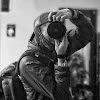
The Importance Photography in the World
Today, people love photos more than ever before. Every meal, every family event, every important moment, gets immortalized by the camera or—in most of today’s documenting—a phone. What used to be a difficult routine that involved shooting, revealing and printing, or buying the Polaroids to have instant gratification for the photos taken.
A Polaroid was the first type of camera I ever used. I was in 12th grade, back in 1999, and my late uncle Eduardo, whom we all called “Bebito”, came to visit his family (my family) in Holguín. I had that week off school, and I could spend time with him, but also took a lot of photos with it, including what we call now selfies.
Yet, people, as I was able to witness in Third-World Cuba, became obsessed with photographing everything since the advent of the digital camera. Back in 2007, when my sister Aylén had a Kodak digital camera that she constantly let me use, or in 2008, when my friend Odette let me play with her own (and better) digital camera, I realized we had the need to take pictures of everything (or everyone) we liked.
Time passed, and I became a translator/journalist/photographer for ¡AHORA! newspaper in Holguín. At the time, I had a Samsung KENOX S760, which was a gift by my uncle Fabio, a math PhD who had spent some time in Angola and had managed to secure a camera for me. I would later evolve into different gears, but that was the beginning of something I didn’t know would have no stop in my life.
Although the evolution of my gear has been something I have already spoken about, I wanted to make this point to be able to express (from my own perspective) what I feel photography has evolved into, even though the true essence has not been lost.
The role of cameras in the world has been extremely important, and its importance is even bigger now with the rise of Artificial Intelligence. Today, beauty filters and AI-generated images have been flowing the web, creating a distorted sense of reality. In that respect, the role of photographers has become more critical to the preservation of the truth.
The magic of photography, which some of us refer to as our superpower, lies precisely on the ability to freeze time. Once captured, an image becomes instantaneously old. The person you photographed is no longer there, the one in front of you is an entirely different individual than the one who is now in your SD card or your phone. Once you press the shutter, you have actually and technically stored an older image of that person, even two seconds later.
The moment is gone, and—as morbid as it may sound—that person is a couple of breaths closer to their last. Maybe that is one of the reasons why we keep on shooting, or why we photograph the same people over and over, or why we go to the same places to take photos, or why any event makes us go back home with hundreds of pictures to download.
Going back through your files teleports you into that moment, what you were feeling, what the temperature was like, even smells and tastes. As I was telling my friend Michael Fiedler the other day over a coffee, while discussing his amazing project Who We Are, we are “… creating a time capsule.” Ten years after the photo has been taken, people will look at them and see how life was like at that place and time.
It is true that portrait photographers are finding it harder today to land gigs because of the cell phones, but there are still people who value their work and importance. Photos are going to be looked at differently when the extended arm shows it is a selfie, or simply when the quality of the print gives it away. Having a camera in your phone has become handy, but not as handy as having a professional immortalize your event, your lifestyle, your beauty. Fortunately, some people still know that.
Despite the fact that people are taking photos at an incredibly higher rate today than before, most of those images wither inside cell phones or are launched into social media. Hardly anything gets printed, except by photographers or their clients. The digital world has submerged us into an apparent lack of need for something you can actually touch or hang on your wall.
This doesn’t make digitally stored images unimportant, but it does make them less impactful. In my opinion, the whole point of photos is to see them in print. I particularly have enjoyed looking at my prints way more than looking at the digital file on a screen, no matter how big it is. Yet, I can admit that I haven’t printed every photo I have taken, I haven’t printed any of the photos that I like, and I haven’t printed every photo that I have loved.
I am sure many photographers can say the same thing, because we all end up discarding tons of our pictures for not being in frame, or in focus, or with the right exposure.
Nevertheless, people will keep on taking pictures, photographers will keep on taking pictures. As Ed Harris’s character Benjamin Asher Ryder said in the movie Kodachrome, “We're all so frightened by time, the way it moves on and the way things disappear. That's why we're photographers. We're preservationists by nature. We take pictures to stop time, to commit moments to eternity. Human nature made tangible.”
I believe that this quote sums up the drive behind photographers, and even by those people who use their cell phones. There are easier and more accessible ways to document life today. Photography has changed and become more generalized, the selfie has become a must on some occasions, even for some of us photographers.
What we choose to do with those pictures may make the difference, both in the impact of documenting or in the ability to make people remember. I’d choose to look at a book of select photos or shuffle select prints than scroll through hundreds of similar images that will probably have no meaning for me. But the stories will be told, one way or another, and the best part of photography is that, unless it is a creative fantasy shoot, it generally tells the truth.