My Last Photos of Cuba
Leaving your country knowing that it will be extremely unlikely —if not impossible— for you to come back is very hard. When I was leaving Cuba, I was already convinced that my hours in my homeland were numbered. So, I took my time to reflect on it and think of what would come next.
I was certain that at some point I would have to take out my camera and take a good-bye photo. After all, after the July 11 protests and the July 27 call that changed my life, I had not been taking my camera out for a ride. I went from having it with me at all times to never taking it out of the house again.
I felt naked and lost.
It was a long car ride, I was picked up by my friend “Vidalito” at 4pm. I had to carry my Covid-19 negative test with me (so did he), and we left the city of Holguín at around 4:30pm, with the plan to get to Santa Clara by 11pm and to sleep at a gas station.
The gas station provided me with one of the photos that I thought was going to be my last in Cuba. A stray dog that has been hovering around was eating our leftover food (a common practice in Cuba is to feed the dogs human food) that we had dumped on the ground for him or her to eat. The puppy, eating by the black Cadillac while two cars, one of them a yellow taxi, sat by the gas pump, and the poor lighting of the place gave me a sense of despair, maybe by realizing my life would never be the same. Being an animal lover, this felt like a “welcome home and good bye” shot.
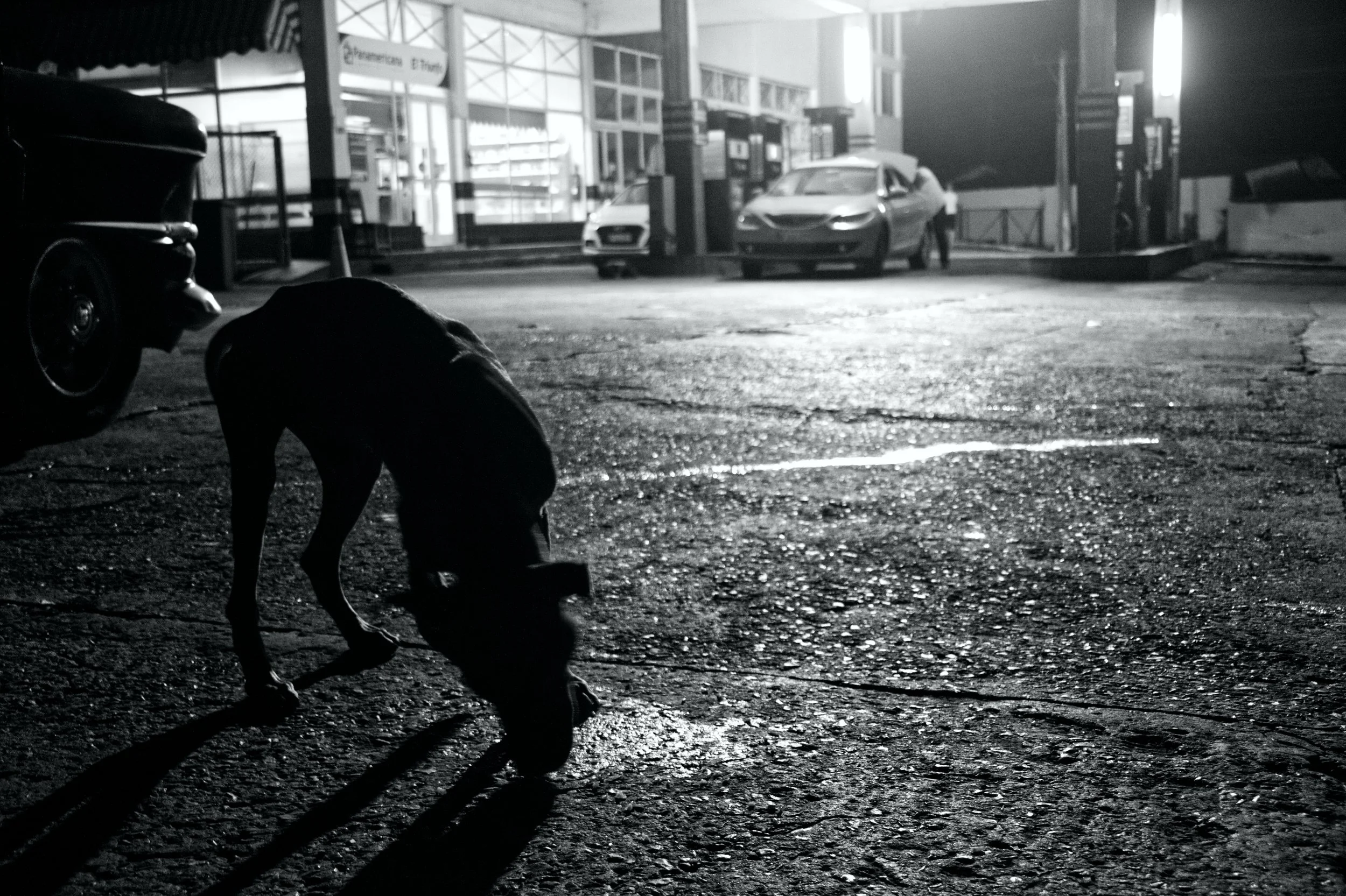
A stray dog eats leftover food from the ground at the Santa Clara gas station. This was my last easternmost photo of Cuba.|Credit: Reynaldo Cruz Diaz
It was a long night. We took turns to sleep on the backseat of the car, comfortable for twenty minutes, but not so much for hours of a hot August evening. We would wake up and leave at around 5am. Yet, needing coffee as most Cubans (especially the kind that hasn’t slept), we stopped at a very rustic coffee place just at the crack of dawn.
That is when I saw it: his black classic Cadillac sitting by the road, as the sky showed different color tones. That was, for the time, my last picture of Cuba. And it was a very fitting one: for a few years, I had been working alongside the drivers of that type of car, catering to the curiosity of traveling Americans. To cap things off, I was going to be welcomed in Mexico by American clients I had had, and for whom I had arranged both a ride to a place with these cars, and a ride to the airport, also with classic American vehicles.
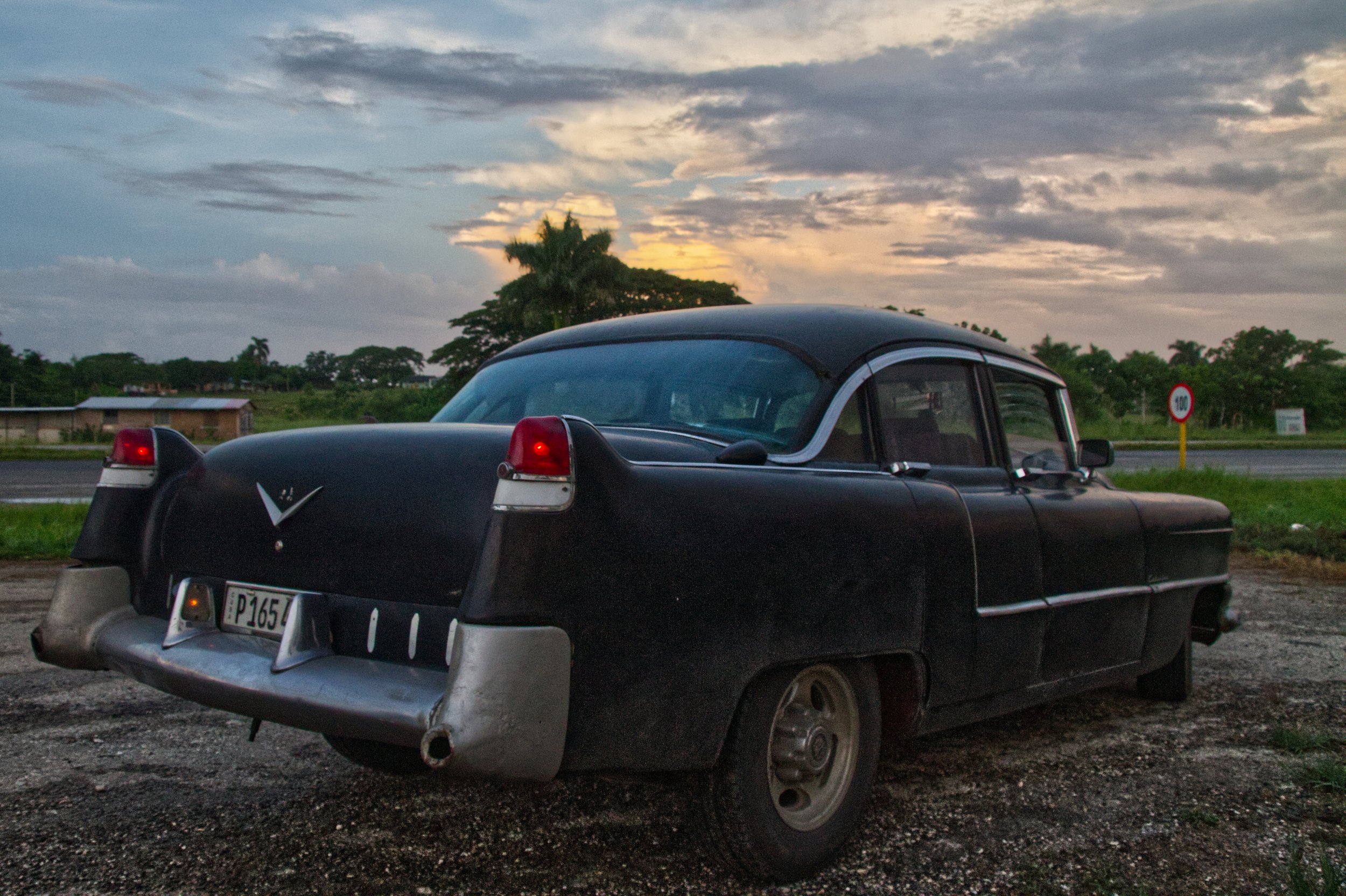
Vidalito’s 1950s black Cadillac sits by the road at dawn on the way to Havana. I thought this was my last fitting photo of Cuba.|Credit: Reynaldo Cruz Diaz
It was my certainty that in a few hours, I was going to be airborne to Madrid, Spain and then to Cancún, Mexico. Or so I thought.
After I was not allowed to board the plane —even after clearing my first check-in at José Martí International Airport in Havana— I was hosted by a couple other friends. In essence, going back to Holguín would have been a huge mistake, mainly taking into account how expensive the ride back home would be, and the fact that by that time, I had NO CHOICE but to leave Cuba.
I called another one of my classic car drivers, and I called Lorena, the sister of my friend Lauren, who told me to go with her and her parents. Fortunately for me, I had other options, and since people at Lauren’s household worked outside jobs, the risk of getting Covid prompted me to move to the house of my friend Yasel Porto, who was already in the US.
Yasel’s mother had been incredibly nice and helpful to me in the past. Both of them made sure I stayed indoors, locked down, away from any possible contagion so I would not lose my plane ticket if I turned out to be positive before flying.
As a result, I would only go out when it was getting dark, to make sure that I had no contact with anybody, to go to her house to get the meals she would make for me.
It was on one of those walks that I, for some reason, was carrying a small backpack with the camera, and I saw this sunset. It was on the intersection of Callejón del Pescado (where she lived) and Pasaje B (where I was staying) and Universidad. A car was coming, and I just stopped for a second, maybe clinging to the type of street photography I had been taking since 2017. A car was coming, and to my dismay it was not a classic car. But to be honest, it didn’t matter at all.
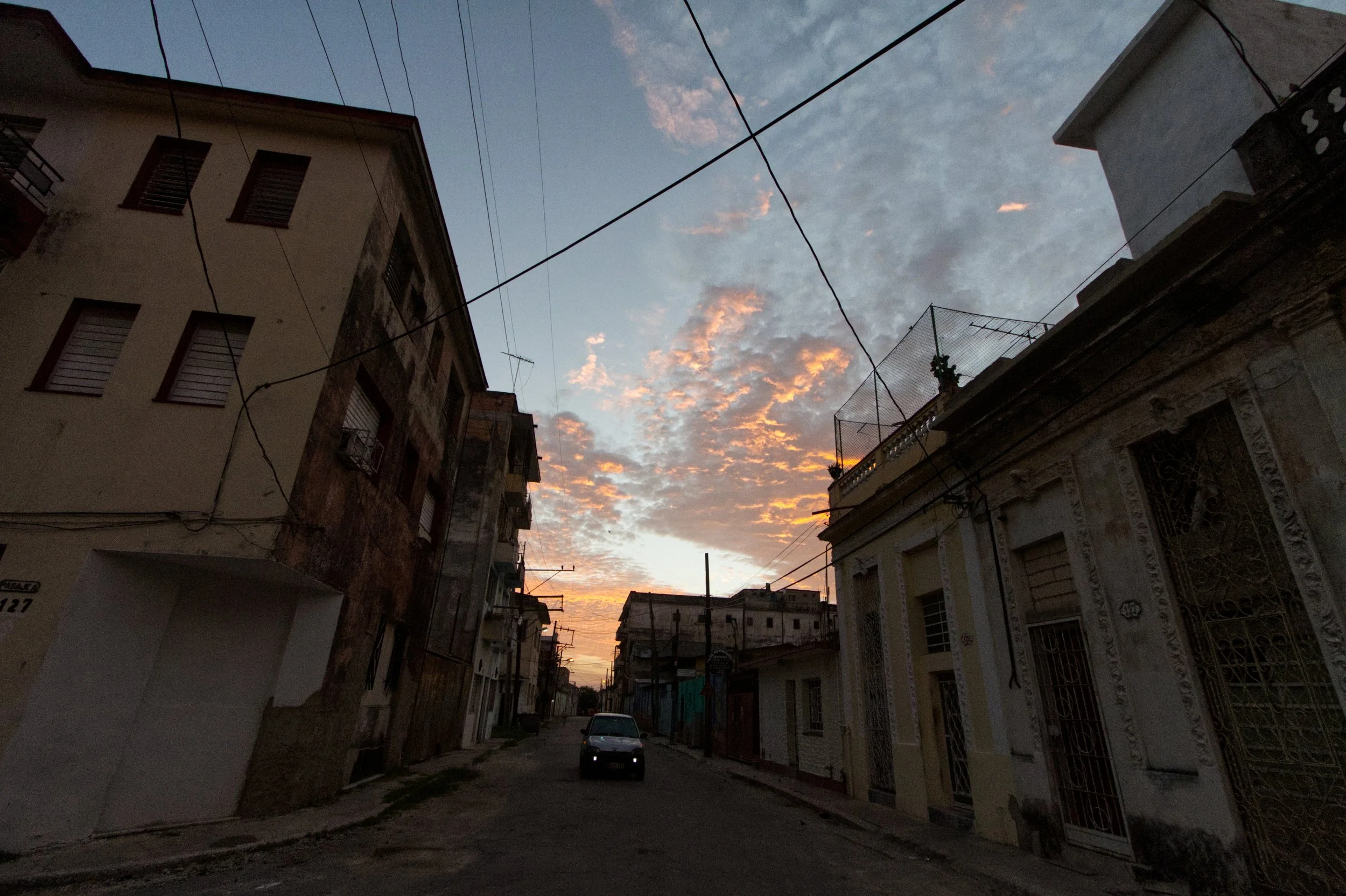
Calle Universidad on the intersection of Pescado and Pasaje B in Cerro at dusk. The lat time I took my camera out on a street in Cuba.|Credit: Reynaldo Cruz Diaz
My last two photos came both on the same day. It was a hot night in late August, and by that time, I already had both my plane ticket (which I had acquired with the help of my longtime friend and partner at I Love Cuba Photo Tours, Yosel Vázquez) and my Covid-negative document. It was a matter of time, so I was not going to risk anything and I stayed sitting in Yasel’s living-room, going over my documents and my suitcase, and making sure everything I had had to take out was back in. I also had a bag of all the trash I had collected, but was only going to dump it when my driver came to pick me up.
So, looking out the window, I saw the improvised balcony with plants, and the way the sunlight hit. I felt it was an appropriate way to say goodbye to Cuba in a photographic way. So, without hesitation, and barely shooting through the bars of Yasel’s balcony gate, I got this photo.
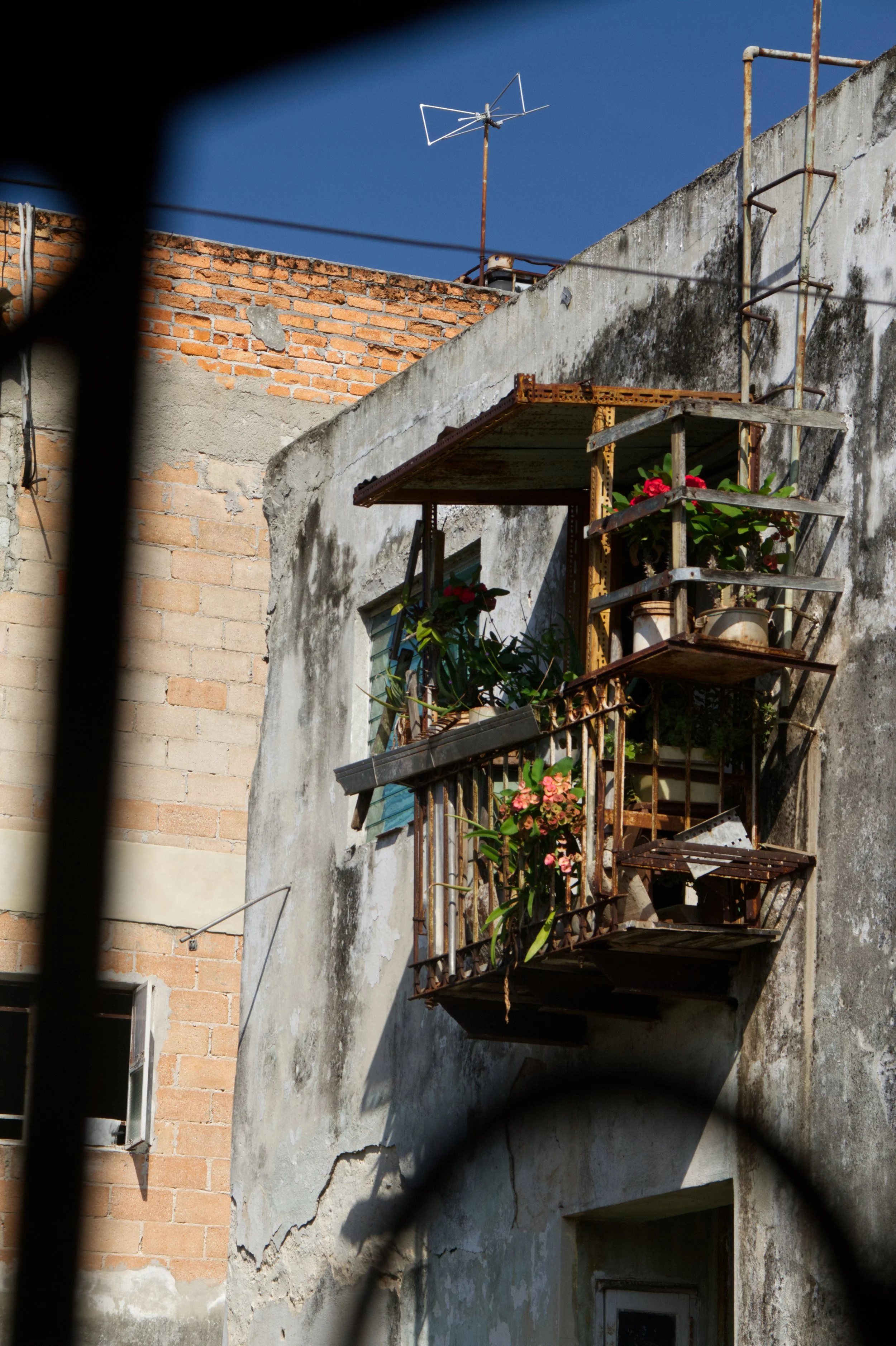
A makeshift balcony in the Havana district of Cerro caught my attention looking out the gated door.|Credit: Reynaldo Cruz Diaz
The last one was taken as a thunderstorm was boiling in. We had a hurricane warning, on top of it all, as Tropical Storm Ida was going to be hitting western Cuba. I looked at the graffiti (probably gone by now) and the chimney (of I was told the Suchel Camacho factory) in the distance. Storm clouds in the background, graffiti on a wall, and a chimney that in today’s Cuba will always symbolize the failure of the Fidel Castro project. Without hesitation, I snapped.
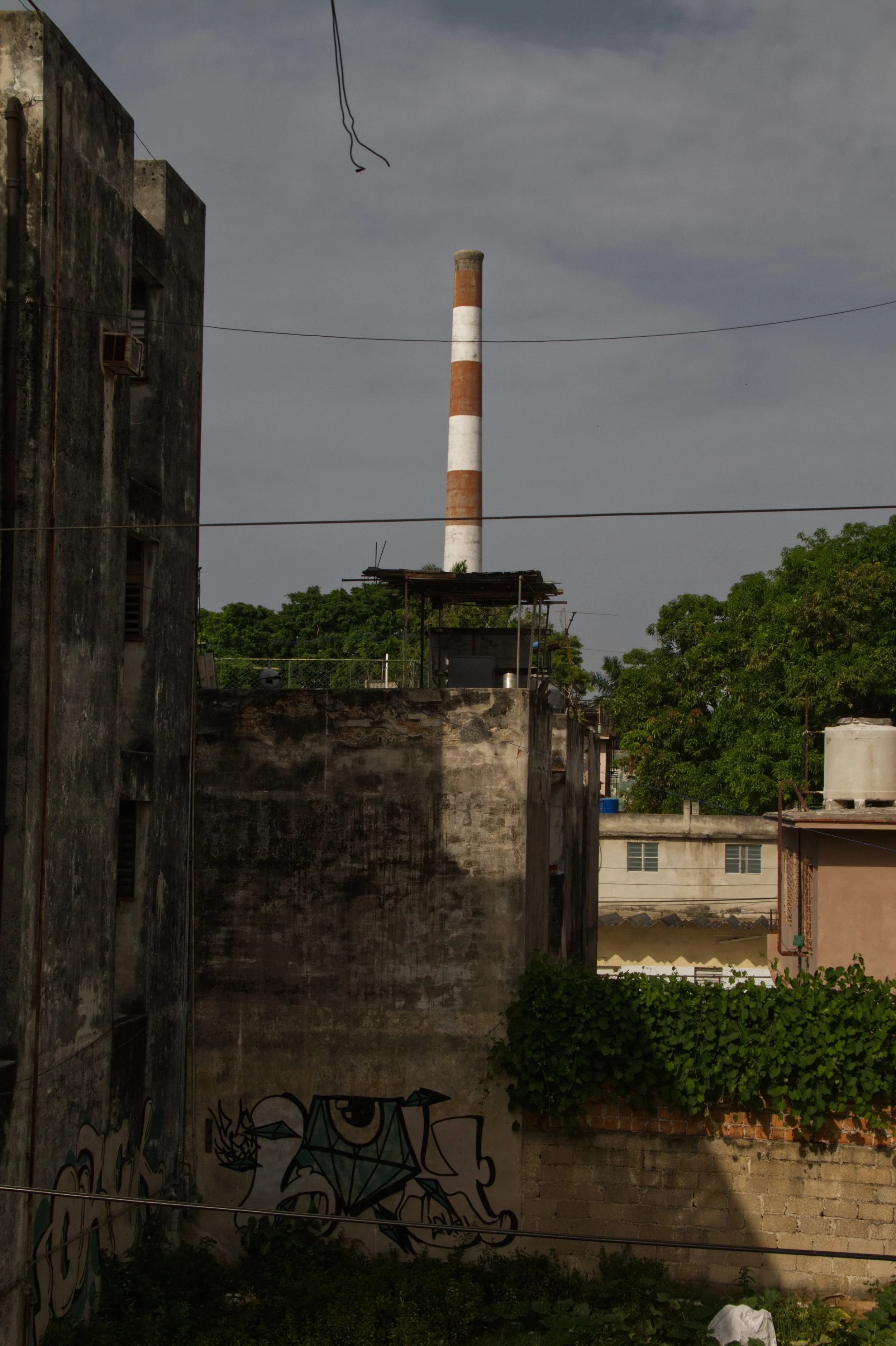
Seemingly, the chimney of the Suchel Camcho facotry from Yasel’s window.|Credit: Reynaldo Cruz Diaz
The next morning, in the very first hours, without even telling most members of my family or my friends, I left Havana towards Varadero to board a plane.
It had taken me to weeks to finally leave the country. Even though that day I was singled out and harassed at the Varadero Airport by a woman posing as a worker —but clearly being part of the repressive apparatus of the Cuban government— I managed to board a plane.
As I texted Chino (the driver who took me both from Havana’s Airport to Lauren’s house and from Yasel’s house to Varadero Airport, and one of our partnering drivers with I Love Cuba Photo Tours), I felt it interesting that my last person texting in Cuba was not a relative. He was just a colleague who had become a friend, and who had refused to leave the airport’s parking lot until I told him I was safe.
I have wondered, many times, what things had been like if I had not had such big urgency to leave. Would I have taken better and more compelling photos of my trip from Holguín to Havana? Would I have taken more pictures in the Cuban capital, having the freedom that I had already been denied in Holguín?
It is possible that I would not have assessed my situation the same way, and that maybe these pictures, which are far from my top 200 of Cuba, could have never been taken. Maybe I could have made a bigger effort, focus more on the photographer side of my personality. In a way, these could have perfectly been taken with a cell phone. Stress and survival mode were the rulers of my actions, and the photographer was, in a way, sidelined.
That is a thought not only for me, but also for any other photographer who reads these lines.